



Visit Ananta
We’d love to introduce you to what makes our community special.
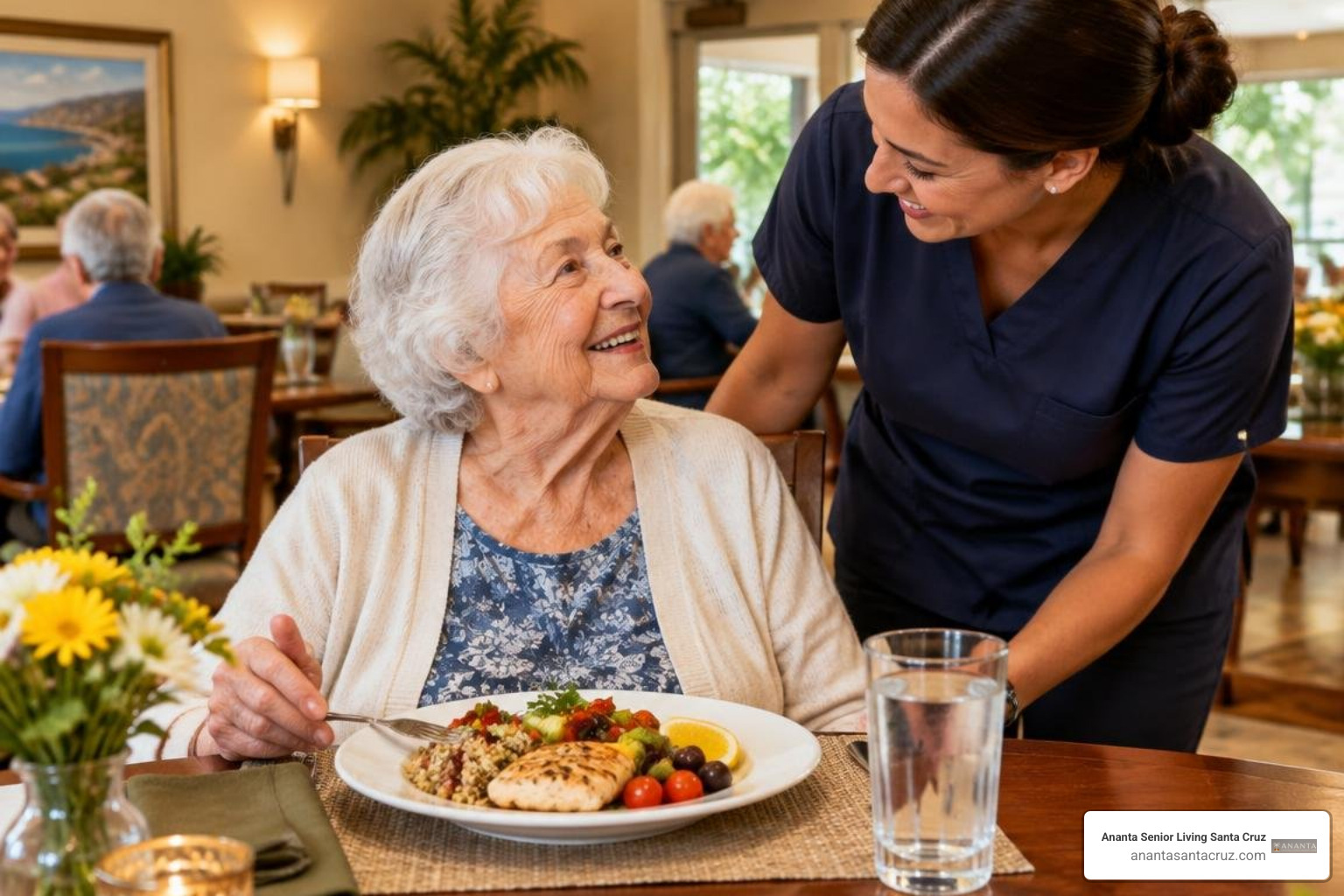
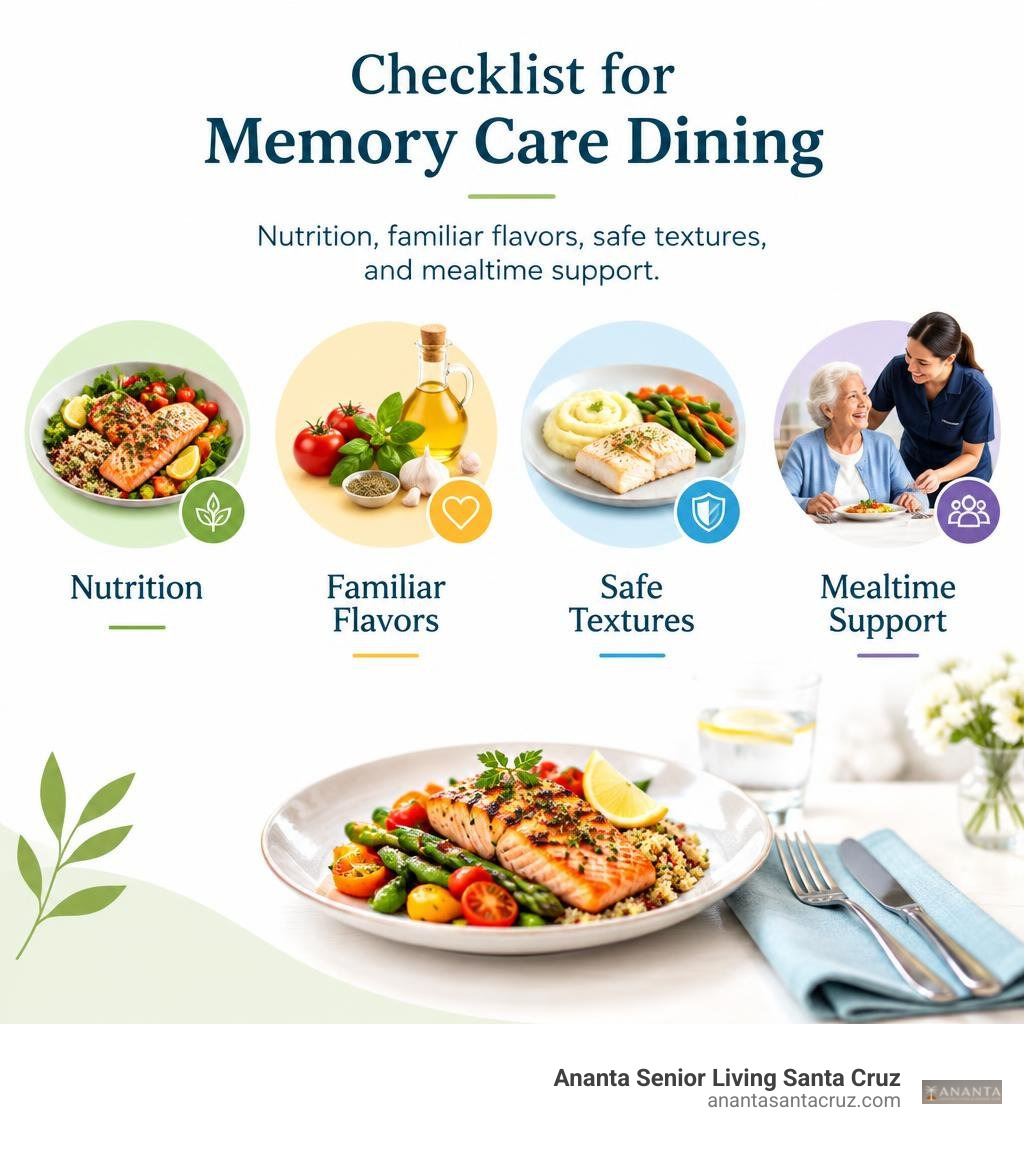
A good memory care dining program does more than serve healthy food. It offers meals a person can enjoy and eat safely, even as appetite, food preferences, or eating skills change. When evaluating a community, ask how its chefs and care team handle familiar flavors, nutrient-rich ingredients, texture needs, and help at mealtimes.
Food cannot cure or reverse Alzheimer’s disease. But thoughtful meals may help residents eat enough, maintain their strength, and feel more at ease at the table. The six benefits below show what to look for beyond an appealing menu.
Culinary medicine in senior living bridges the gap between clinical nutrition and the simple, daily joy of eating. While standard institutional kitchens often prioritize ease of bulk preparation, specialized culinary teams focus on neuroprotection, digestive health, and dignified hospitality.
Families considering chef-prepared meals in memory care should look for dining teams that make nutrition part of daily, person-centered support. The National Institute on Aging identifies adequate nutrition as an important part of caring for people with Alzheimer’s disease.
Brain health relies heavily on consistent, anti-inflammatory nutrition. When professional chefs design menus around neuroprotective dietary frameworks—such as the MIND diet (a blend of Mediterranean and DASH eating patterns)—they emphasize ingredients clinically linked to slower cognitive decline.
Key dietary components prioritized in structured memory care meal programs include:
Rather than relying on synthetic supplements, culinary professionals weave these vital compounds directly into appetizing, scratch-made dishes.
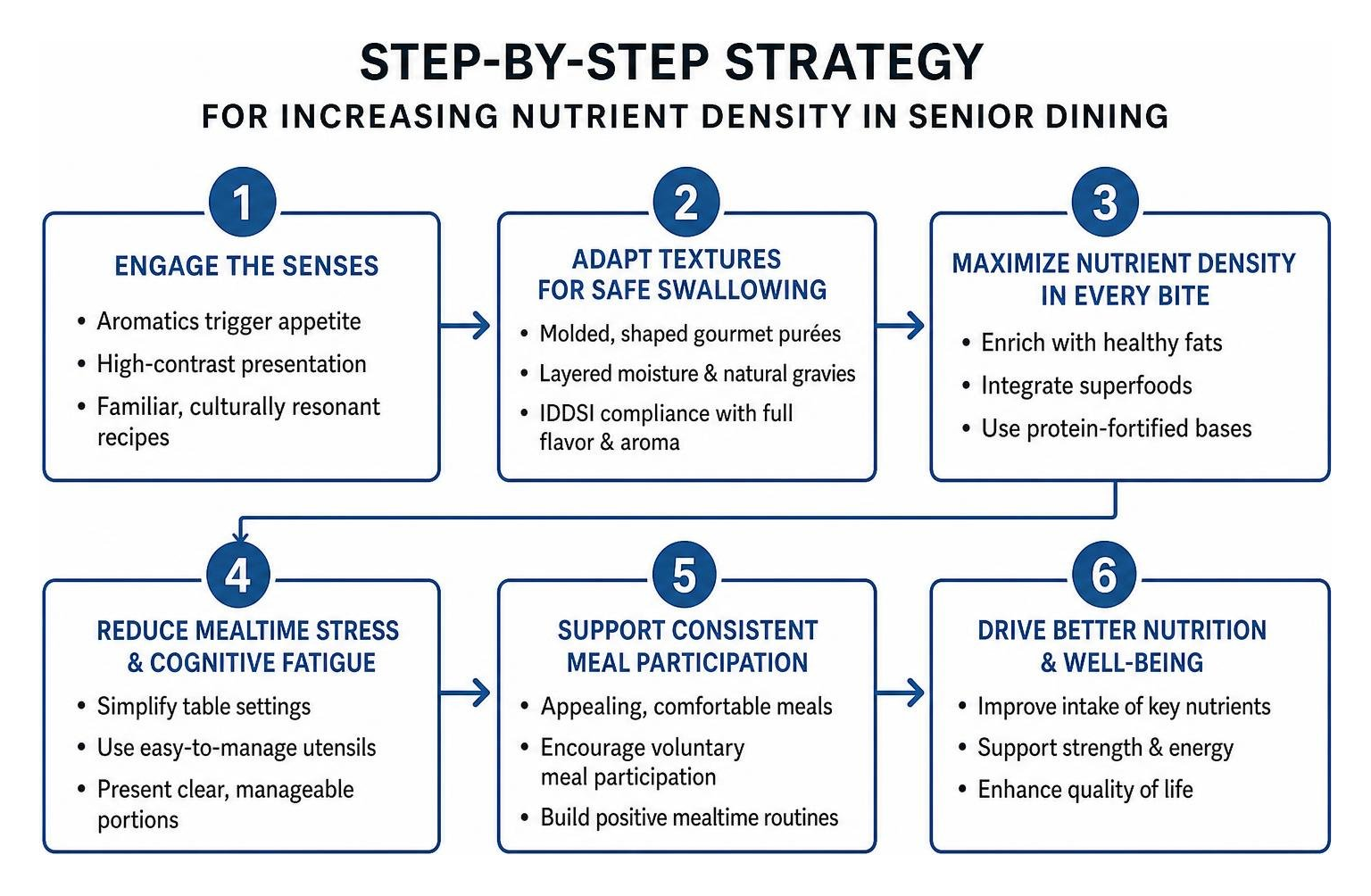
As Alzheimer’s disease and other dementias progress, sensory perception often dulls. Olfactory decline reduces the ability to smell food, which diminishes appetite and can lead to unintended weight loss. Furthermore, visual agnosia makes it difficult for residents to distinguish foods placed on standard white dinnerware.
Professional chefs leverage sensory cues to revitalize appetite:
Difficulty swallowing, known clinically as dysphagia, is a common complication in moderate-to-advanced memory loss. Traditional institutional approaches to dysphagia often resort to unappealing, homogeneous purées that strip meals of visual appeal and dignity.
Culinary-trained teams approach texture modification as a craft:
Older adults with memory impairment frequently experience early satiety, fatigue, or pacing behaviors that burn extra calories while reducing seated mealtime. When eating stamina is low, volume cannot be the primary driver of nutrition—nutrient density must take center stage.
Our culinary teams integrate the following practices to provide maximum nourishment in smaller, manageable portions:
Navigating complex plates, heavy silverware, or cluttered table settings creates cognitive overload. When eating becomes confusing or physically frustrating, residents often push plates away entirely.
Chef-prepared memory care programs streamline the physical experience of dining:
Memory loss is not static; nutritional requirements and motor abilities shift as conditions evolve. In our community, memory care culinary programs adapt continuously to match each resident’s journey.
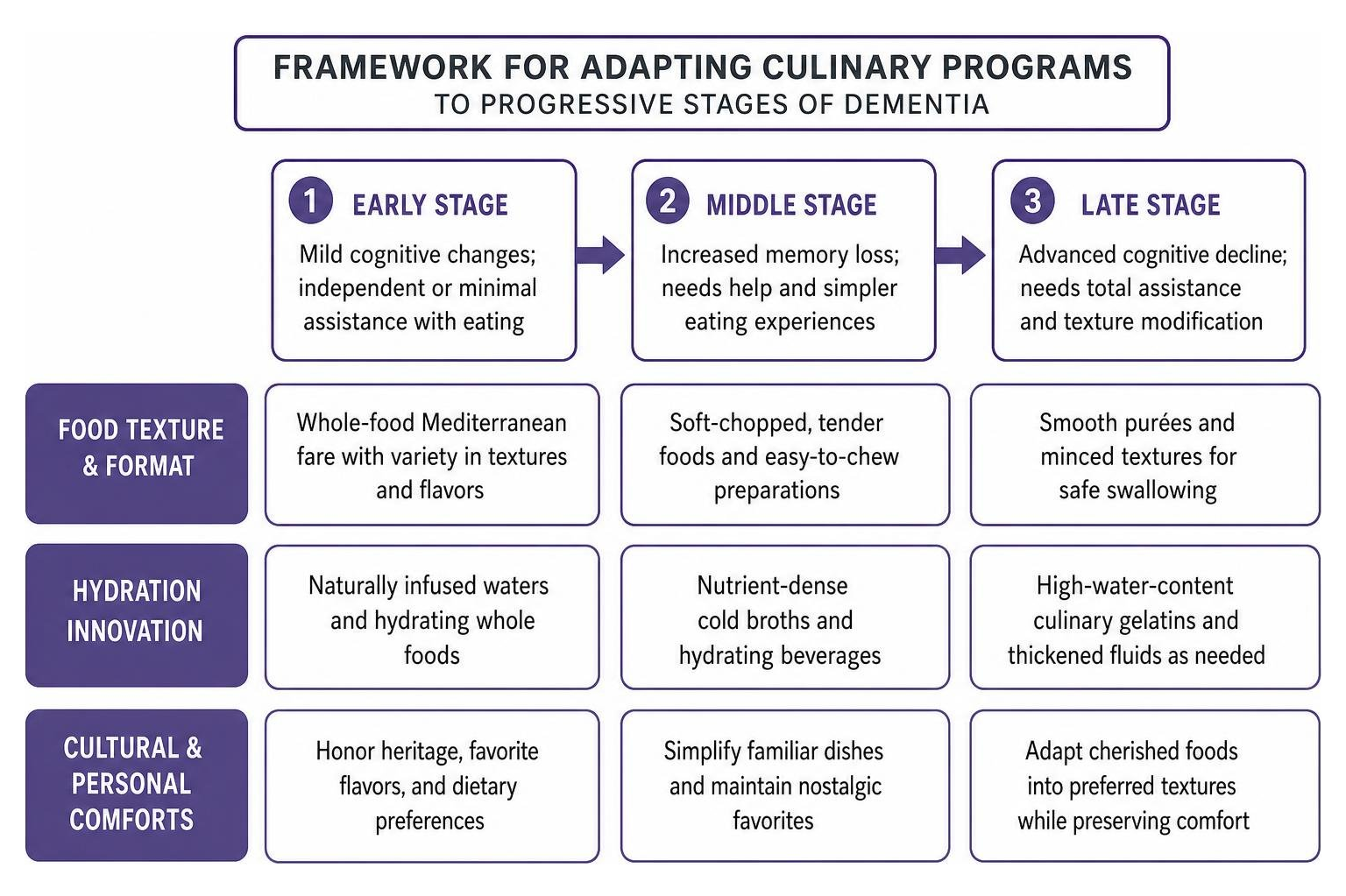
Personalized dining plans address:
Understanding the differences between basic food service and dedicated culinary medicine helps families make informed decisions for their loved ones.
| Feature | Standard Institutional Senior Dining | Chef-Prepared Memory Care Dining |
|---|---|---|
| Ingredient Sourcing | Pre-packaged, frozen, and processed components | Fresh, whole, and seasonally sourced ingredients |
| Nutritional Focus | Basic caloric and dietary minimums | Anti-inflammatory, brain-supportive neuro-nutrition |
| Dysphagia Management | Flat, uninspired puréed scoops | Artfully shaped, gourmet IDDSI-compliant textures |
| Sensory Engagement | Minimal aroma; low visual contrast | Active aromatics, high-contrast visual plating |
| Dining Adaptability | Rigid, standard utensil requirements | Finger foods, handheld options, and single-course pacing |
| Care Coordination | Kitchen disconnected from daily care staff | Direct collaboration between chefs and wellness teams |
When evaluating chef prepared meals memory care communities for a family member, look beyond glossy sample menus. Take time to observe an active meal service firsthand:
In advanced stages, culinary teams focus on ease of consumption and swallow safety. Meals are modified into soft, bite-sized finger foods or velvety, shaped purées that require minimal chewing. Chefs enhance savory aromatics and subtle natural seasonings to stimulate diminished taste buds, while care partners provide one-on-one dining assistance in a low-stimulation setting.
Our care team works directly with our executive chef and registered dietitians to monitor each resident’s daily caloric intake, hydration levels, and dining behavior. If a resident shows signs of appetite loss, weight changes, or chewing difficulties, the care team immediately communicates these shifts so the kitchen can adjust portion sizes, textures, and nutrient density.
Sensory plating leverages visual contrast, vibrant natural colors, and familiar comforting aromas to capture attention. Clear contrast between the food and the plate helps overcome visual processing issues, while the rich smell of simmering broths or baking herbs activates hunger cues in the brain, naturally reminding residents to eat without verbal pressure.
Exceptional dining is foundational to holistic memory wellness. Providing nourishing, beautiful, and easily edible food honors the individual, preserves personal dignity, and supports physical resilience throughout every stage of aging.
At our luxury memory care community in Santa Cruz, we combine coastal-inspired ingredients, scratch-made culinary excellence, and compassionate care to create joyful dining experiences every single day. We invite you to tour our dining spaces and see how culinary medicine elevates the lives of our residents.
For more information about our care, view our other page.
We’d love to introduce you to what makes our community special.